
Publishing a book can be an exciting project for anyone, including those working in the government. But there are specific rules that must be followed. These rules help keep the government’s image clean. They aim to prevent any issues that might come up if a government employee writes a book.
For government workers in the United States, understanding these rules is very important. They should know the regulations on publishing books. By following these rules, you can publish a book and still do your job well.
Key Takeaways:
- Government employees can publish books, but it is important to follow the rules and regulations set by the government.
- Understanding the guidelines for publishing books as a government employee is crucial to maintaining integrity and avoiding conflicts of interest.
- Public servants should be aware of the specific regulations regarding the use of government resources and the content of the book.
- Copyright considerations and ethical opinions play a role in the publication of books by government employees.
- By following these guidelines, government employees can share their expertise through writing while upholding their public service roles.
Freedom of Press Comparison: China vs. United States
In the United States, it’s useful to look at the difference in press freedom with China. This helps us understand how writers in the U.S. can freely express their thoughts. It shows the challenges faced in countries like China.
The differences in press freedom are clear in a chart by the Congressional-Executive Commission on China. This chart gives a detailed look at how the press operates in the U.S. compared to China. It clearly shows the issues journalists face in China, like strict media control.
In China, journalists and writers find it hard to publish freely. The government there keeps a close watch to keep its power unchallenged. They limit what can be published, especially if it goes against their policies.
In the United States, the freedom of the press is a key part of democracy. The First Amendment of its Constitution guarantees this freedom. This means people can freely write and publish their thoughts. The country has a rich diversity of opinion because of this.
Unlike in China, U.S. journalists and writers can publish without fear. Even government workers can write about their ideas. This freedom is what allows for open conversations and the sharing of important information.
Looking at press freedom in both countries highlights the U.S.’s unique stance. It values and supports writers, including those in the government. This view is important when thinking about allowing them to publish.
Authorization for Self-Publishing
In the U.S., government employees can freely publish books on their own. They don’t need special permission. This lets them share what they know without government oversight.
If they decide to run a publishing business, they should get a business license. This step ensures they follow local laws and tax rules for their business. So, they can publish legally.
Unlike some other professions, book publishing doesn’t have a federal licensing process in the U.S. However, publishing needs to follow all business laws. This means employees can publish their books without extra government checks.
Through self-publishing, government workers can enjoy more creative freedom. They can tell their stories to people worldwide. This has encouraged more sharing of knowledge and ideas with readers everywhere.
Image Alt Tag: self-publishing

Copyright Considerations
When government employees publish books, they must know about copyright rules. In the U.S., work done for the government isn’t copyrighted. It’s seen as owned by the public.
This public work is free for anyone to use, copy, or share. But, it’s critical to check for copyright with other sources. Make sure no laws are broken when adding this material to government publications.
To stay clear of copyright issues, do your homework. Get permissions when needed, especially for outside sources in government works. This helps keep the material reliable, avoiding legal problems.
The Importance of Copyright Compliance
Following copyright laws is vital to avoid trouble and keep the trust in government publications. We must respect and follow the law as government workers.
Knowing and respecting copyright rules helps make our publications accurate and legally sound. We share important knowledge while protecting copyrights. This respect is key in our work.

In the upcoming part, we’ll look at using government resources in publications.
Use of Government Resources
Government employees need to watch how they use resources when writing a manuscript. They should not use office computers, printers, or other equipment. This keeps our work honest and follows government rules.
We should work on our manuscripts only in our free time, not at the office. This keeps our personal and work activities separate. It also makes sure we don’t misuse our job’s resources. Doing this follows the rules and is a fair use of what the government provides us.
We are responsible for how we use government resources when creating our manuscripts. Keeping our personal time and work time distinct is key. It shows we work with integrity and follow the ethical standards for government work.
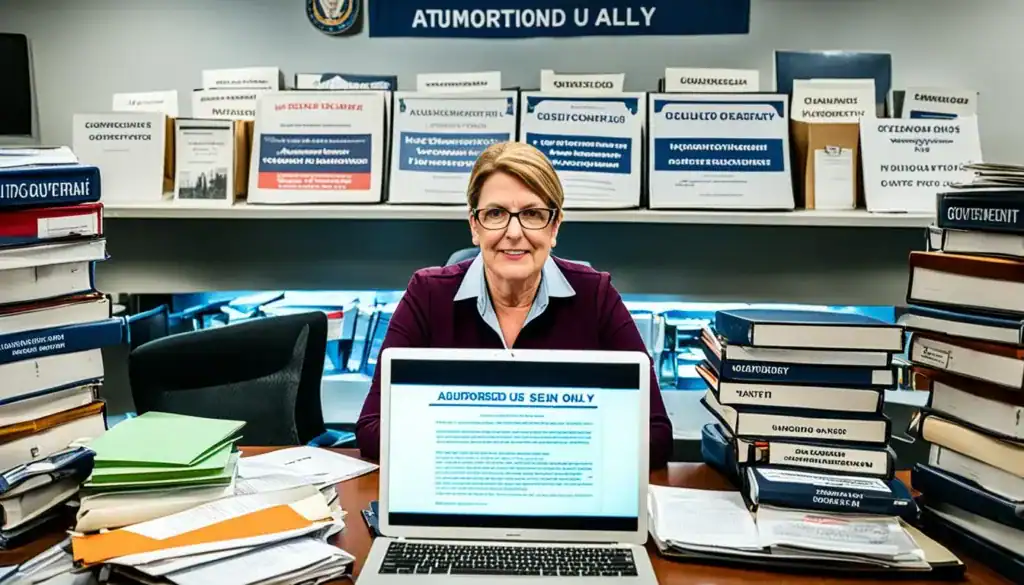
Content of the Book
When we write a book as a government worker, we focus on content that’s safe. We check that it follows rules about sharing sensitive things. This means we look at public documents and analyze the law, not our own stories.

Doing this helps us keep our public servant role’s dignity. We share important knowledge and insights in our writing.
Avoiding Confidentiality Issues
Keeping secrets is key in our book as government employees. We make sure not to include secret info that might harm safety or privacy. This keeps our image strong and helps protect government and the public.
Relying on Public Records
We use public records a lot for our book’s content. They are a key source, with laws, court cases, and official papers. Using this data makes our work more accurate and trusted.
Reviewing and Analyzing Laws
Our book’s focus, as government staff, is on laws and rules. We look at legal stuff, not personal stories. This keeps our book fair, educational, and fitting for public service.
Previous Ethical Opinions
When public servants publish books, they must think about past ethical opinions and guidelines. These cover using secret info, avoiding conflicts of interest, and doing official duties correctly. Knowing these insights helps us follow the rules for government employees’ book publishing.
Conclusion
In the United States, government employees can write and publish books. This allows them to share their knowledge. Yet, they must follow certain rules about what they write. They need to keep some things in mind when putting out a book.
First, they should know about copyrights. If a book is made as part of their job, it’s not protected by copyright law. The whole book is meant for everyone to freely use. But, they need to make sure not to use someone else’s copyrighted work. This could cause problems.
Next, it’s important for them to use their own time and resources. When working on a book, they should do it at home. They shouldn’t use government facilities or equipment to make their book. This makes sure their work stays separate from their government job.
Finally, they should follow the rules around ethics for writing books. These rules touch on keeping information private and staying away from activities that might look like a conflict of interest. By sticking to these rules, government workers can publish books in a way that is right for their role.