
Welcome to our book review of “A Farewell to Arms” by Ernest Hemingway. In this article, we will delve into the captivating world of this renowned war novel set during World War I. Hemingway’s powerful storytelling and unique writing style have left a lasting impression on readers worldwide.
“A Farewell to Arms” takes us on a journey through the tumultuous backdrop of war, where romance and tragedy intertwine. The novel tells the story of Frederick Henry, an American paramedic officer, and Catherine Barkley, a British nurse, as they navigate the complexities of love amidst the chaos of the battlefield. Hemingway’s vivid portrayal of the characters and their struggles captures the essence of the human condition in times of war.
One of the remarkable aspects of Hemingway’s writing is his ability to capture the raw emotion and stark realities of war. Through his concise and realistic prose, he paints a vivid picture of the horrors and sacrifices that soldiers endure. His writing style, characterized by its simplicity and objective realism, immerses readers in the harrowing experiences of the characters.
Throughout the novel, Hemingway explores timeless themes such as the interplay between love and war, loyalty and desertion, and the futility of violence. These themes resonate deeply with readers, provoking thought and reflection on the human capacity for love, resilience, and the devastating consequences of war.
In our review, we will delve deeper into the plot, Hemingway’s writing style, the themes explored in the novel, and the impact of war on the characters and narrative. We will also discuss the critical reception of “A Farewell to Arms” and its lasting influence on literature.
Key Takeaways:
- “A Farewell to Arms” is a compelling war novel by Ernest Hemingway, set during World War I.
- Hemingway’s writing style is characterized by simplicity, realism, and vivid descriptions.
- The novel explores themes of love, war, loyalty, and the futility of violence.
- The impact of war on the characters and the consequences of their choices are central to the narrative.
- The novel has received both praise and criticism since its release, but remains a significant contribution to war literature.
Overview of A Farewell to Arms
A Farewell to Arms, written by Ernest Hemingway, is a gripping novel set in the backdrop of Italy during World War I. The plot centers around the life of Frederick Henry, an American paramedic officer serving in the Italian Army. After being wounded in combat, Frederick’s life takes an unexpected turn when he falls in love with Catherine Barkley, a compassionate British nurse who tends to his wounds.
The novel explores the complexities of their relationship amidst the chaos and brutality of war. Drawing from his own experiences as an ambulance driver during World War I, Hemingway brings a sense of authenticity and emotional depth to the story. Through Frederick and Catherine’s journey, Hemingway delves into the themes of love, war, and the human spirit.
Within the pages of A Farewell to Arms, readers encounter a cast of compelling characters. One such character is a socially awkward priest who provides spiritual guidance to Frederick, offering a unique perspective on the moral conflicts of war. Another memorable character is Rinaldi, Frederick’s roommate, who embodies the bravado and camaraderie present among soldiers on the frontlines.
Set against the stunning Italian landscapes and villages, the novel vividly portrays the harsh realities of war. Hemingway’s meticulous descriptions paint a haunting picture of the devastating impact of conflict on individuals and society as a whole. The setting serves as a powerful backdrop, heightening the emotional intensity and highlighting the stark contrast between love and violence.

Hemingway’s Writing Style in A Farewell to Arms
Hemingway’s writing style in A Farewell to Arms is a testament to his mastery of objective realism. Through his prose, Hemingway brings to life the Italian landscapes and villages with vivid and descriptive passages. His attention to detail allows readers to immerse themselves in the settings of the novel, experiencing the sights, sounds, and atmosphere alongside the characters.
An equally significant aspect of Hemingway’s writing style is his use of dialogue. The characters in A Farewell to Arms engage in snappy and authentic conversations, revealing their personalities and emotions. The dialogue adds depth to the narrative, capturing the essence of human interaction amidst the chaos of war.
One of the defining characteristics of Hemingway’s writing style is its simplicity. His sentences are short and straightforward, devoid of excessive adjectives and adverbs. This minimalist approach creates a sense of clarity and directness, allowing the events and emotions in the story to speak for themselves.
To fully appreciate Hemingway’s writing style in A Farewell to Arms, it is important to recognize the impact of objective realism, descriptive passages, dialogue, and simplicity. These elements work together to create a compelling and immersive reading experience, showcasing Hemingway’s skill as a storyteller.
Themes in A Farewell to Arms
In Ernest Hemingway’s novel, A Farewell to Arms, various themes resonate throughout the story, offering readers a deeper understanding of the complex human experience. The interplay between love and war is a central theme explored in the novel. Amidst the chaos and brutality of the war, the characters grapple with the challenges of maintaining love and loyalty in a world torn apart by violence.
The theme of loyalty and desertion is particularly poignant in the story. As the characters navigate their tumultuous relationship, they struggle with the demands of their respective duties and the temptation to abandon their commitments. This internal conflict adds layers of complexity to their love story and raises profound questions about the nature of loyalty in times of war.
Furthermore, the novel delves into the futility of violence and the profound impact it has on individuals and society. Hemingway portrays the devastating consequences of war through vivid descriptions of its physical and psychological toll. The senselessness of violence is starkly contrasted with the characters’ pursuit of love and happiness, highlighting the tragic nature of conflict.
A notable aspect of the story is the pervasive lack of commitment present throughout the narrative. The protagonist, Frederick, abandons his military service to be with Catherine, highlighting the individual’s desire for personal fulfillment and love. However, this lack of commitment is shadowed by a looming sense of doom, reflecting the ever-present consequences of their actions in a world consumed by war.
The Impact of War in A Farewell to Arms
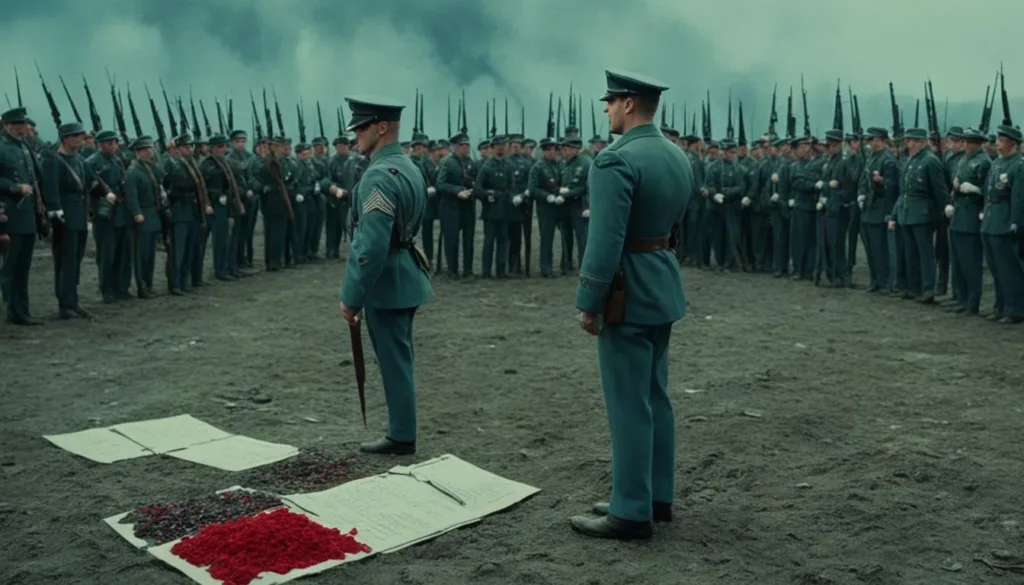
While A Farewell to Arms is primarily a love story, the impact of war is a major theme that permeates the novel. Ernest Hemingway skillfully depicts the devastating consequences of war, both on the physical and psychological well-being of the characters.
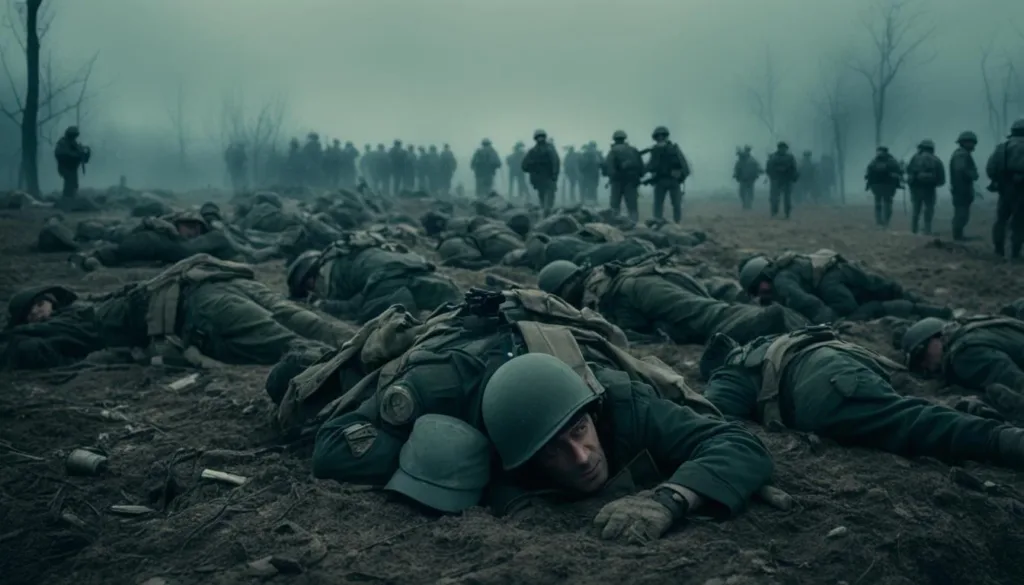
Hemingway’s vivid descriptions allow readers to visualize the wounds suffered by the soldiers, both on the battlefield and in the makeshift hospitals. He does not shy away from portraying bloodshed and pain, emphasizing the harsh reality of war and its toll on human bodies.
“The wounded lay all along the road… Some were dead and some looked it.”
In addition to the physical wounds, Hemingway delves into the psychological impact of war on the characters. The relentless exposure to violence and loss leaves them emotionally scarred and disillusioned. Frederick Henry, the protagonist, struggles to find meaning in the chaos, while Catherine Barkley copes with her own trauma.
“So every day we lose something of ourselves.”
The novel also effectively portrays combat itself, capturing the chaos, confusion, and brutality that define the battlefield. Through Hemingway’s writing, readers are exposed to the senselessness of violence and the futility of war. The depiction of combat serves as a stark reminder of the human cost and the sense of numbness that war brings.
Ultimately, A Farewell to Arms reinforces the idea that war has long-lasting consequences, not only on the lives of individual soldiers but also on society as a whole. The physical and emotional scars inflicted by war leave an indelible mark on the characters and highlight the tragic nature of conflict.
The Romance in A Farewell to Arms
The romance between Frederick and Catherine is a central aspect of A Farewell to Arms. Their relationship develops amidst the horrors of war, with moments of tenderness and passion. They face numerous challenges and make sacrifices for each other throughout the novel. The love between them is portrayed as both passionate and tragic, with a sense of doom hanging over their happiness.
Their love is a powerful force that offers solace and refuge in a chaotic world. Despite the turmoil and uncertainty surrounding them, Frederick and Catherine find solace in their relationship, finding comfort and strength in each other’s arms. Their love becomes a source of hope and a sanctuary from the harsh realities of war.
Their connection deepens through shared experiences and intimate moments, creating a bond that defies the constraints of time and circumstance. It is a love that transcends the physical and emotional barriers imposed by war, representing the resilience of the human spirit in the face of adversity.
“But you’ll always mean everything to me. I’m just like always; I’m always thinking of you. I feel I can’t exist without you.”
Their relationship is not without sacrifice. As the war intensifies and threatens their happiness, Frederick and Catherine are forced to make difficult choices. They must navigate the treacherous terrain of loyalty, duty, and self-preservation, ultimately leading to heart-wrenching decisions and profound acts of sacrifice.
Their love story in A Farewell to Arms is a poignant portrayal of the complexities and contradictions of human relationships. It explores the enduring power of love in the face of adversity and the sacrifices one is willing to make for the sake of that love. Frederick and Catherine’s romance embodies the essence of passion and tragedy, leaving a lasting impression on readers.
Critical Reception and Impression of A Farewell to Arms
A Farewell to Arms, upon its release, garnered mixed reviews from critics and readers alike. While some praised Ernest Hemingway’s portrayal of war and the love story, others raised concerns about the lack of depth in the characters and the portrayal of women.
Hemingway’s writing style, however, left a lasting influence on subsequent generations of writers. His use of objective realism and descriptive passages created a sense of authenticity in the narrative. The simplicity of his prose and his ability to capture the essence of war resonated with many readers.
Readers have had varying impressions of A Farewell to Arms. Some appreciate the novel’s realism, recognizing it as a powerful depiction of the horrors of war and the complexities of love. Others, however, feel that the emotional impact of the story falls short when compared to other war novels.
“A Farewell to Arms struck a deep chord within me. Hemingway’s portrayal of war and the bond between Frederick and Catherine is hauntingly beautiful.” – Reader Review
“While the novel showcases Hemingway’s writing prowess, it feels lacking in terms of character development. The portrayal of women, in particular, seems shallow and one-dimensional.” – Literary Critic
The critical reception and reader impressions of A Farewell to Arms highlight the polarizing nature of Hemingway’s work. Despite the differing opinions, it is undeniable that this novel has cemented its place in literary history and continues to inspire and influence writers to this day.
Conclusion
A Farewell to Arms is a poignant and thought-provoking novel that explores the themes of love, war, and the human condition. Hemingway’s writing style, with its simplicity and realistic portrayal of war, leaves a lasting impression on readers.
Despite receiving both praise and criticism, A Farewell to Arms remains an important work in Hemingway’s canon and a significant contribution to war literature. The novel’s exploration of the intertwined nature of love and war, the dilemmas of loyalty and desertion, and the futility of violence resonates with readers and offers valuable insights into the complexities of the human experience.
Hemingway’s objective realism and evocative descriptions of the physical and psychological wounds caused by war provide a vivid and gritty depiction of the consequences of conflict. Through the unforgettable romance between Frederick Henry and Catherine Barkley, Hemingway captures both the passion and tragedy that can arise amid the chaos of war.
A Farewell to Arms stands as a testament to Hemingway’s mastery as a writer and his ability to capture the essence of the human condition. Its enduring impact on readers and its place in the literary landscape solidify its status as a classic of war literature.