
Welcome to our book review of Brave New World by Aldous Huxley. In this thought-provoking dystopian novel, Huxley presents a vision of a future society that challenges our understanding of freedom, individuality, and the role of technology. Published in 1932, Brave New World remains a timeless classic that continues to captivate readers today.
Key Takeaways:
- Aldous Huxley’s Brave New World presents a dystopian vision of a future society.
- The novel explores themes of science, genetic engineering, and social control.
- It challenges the ideals of a utopian society and raises important questions about personal freedom and societal stability.
- Brave New World continues to be relevant today, highlighting the potential consequences of rapid technological advancements.
- The book appeals to readers who enjoy dystopian literature and thought-provoking philosophical discussions.
Overview of Brave New World
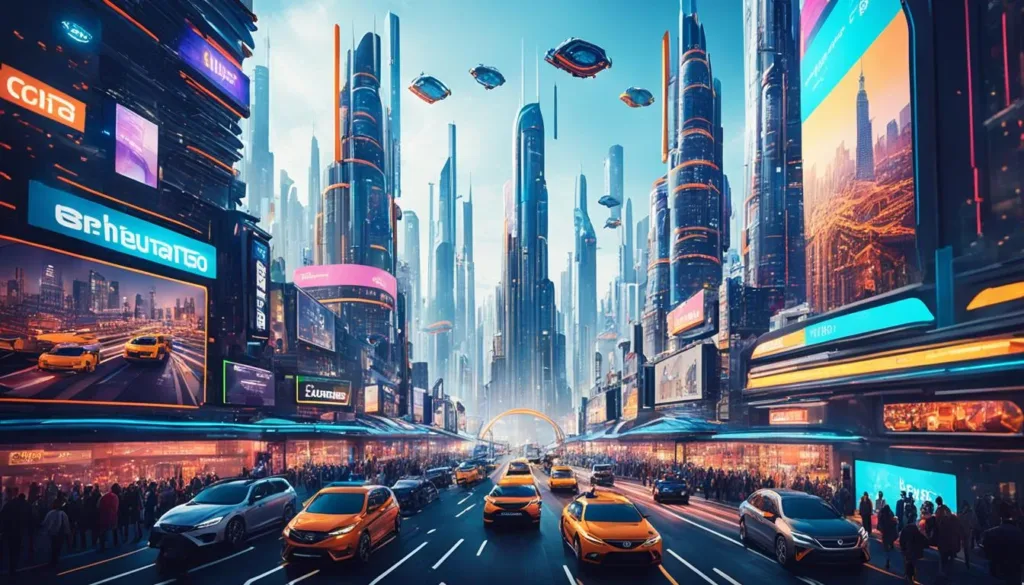
Brave New World is a dystopian novel set in a futuristic World State where technology and genetic engineering have transformed society. In this highly controlled and stratified world, citizens are created and conditioned to fulfill specific roles. The novel explores the consequences of a society that prioritizes pleasure and stability over personal freedom and individuality. It serves as a critique of a society where happiness is manufactured and conformity is enforced.
Themes in Brave New World
Brave New World explores a variety of thought-provoking themes, including totalitarianism, eugenics, technology, and personal responsibility. The novel raises important questions about the delicate balance between individual freedom and societal stability.
The World State depicted in the novel exemplifies a form of totalitarianism, where citizens are stripped of their personal agency and subject to strict social control. This theme challenges readers to consider the inherent dangers of an all-encompassing government and the potential loss of individual freedom.
Eugenics, the selective breeding of individuals for desirable traits, is a central theme in Brave New World. The novel presents a society where citizens are created and conditioned to fit specific roles and social hierarchies. This exploration of eugenics prompts readers to reflect on the ethical implications of manipulating human life for societal goals.
The dangers of technology also come under scrutiny in Brave New World. The novel conveys the potential dehumanizing effects of a society where science and pleasure dominate. It raises concerns about the loss of personal agency in favor of convenience and the moral boundaries of scientific progress.
Lastly, Brave New World prompts readers to consider the concept of personal responsibility in the face of societal expectations. It challenges the notion that stability should come at the expense of individuality, fostering reflection on the moral choices individuals make in shaping their own lives.
Analysis of Brave New World
Brave New World presents a complex and thought-provoking critique of a dystopian society. It challenges the notion of a perfect utopia by highlighting the flaws and sacrifices inherent in a highly controlled society.
The novel explores the physical and psychological effects of a society built on superficial happiness and the suppression of individuality. It poses questions about the nature of freedom, happiness, and the consequences of sacrificing personal agency for stability.
“Brave New World takes a critical look at a society that sacrifices personal freedoms in pursuit of a perfect utopia. It depicts the perils of a society that prioritizes conformity over individuality, and the negative consequences that arise from such control.” – Literary Critic
By depicting a dystopian society, Brave New World offers a complex read that challenges readers’ perspectives and forces them to consider the implications of societal control. It exposes the dangers of an idealistic vision that sacrifices authentic human experiences and individual freedoms.
Through its vivid imagery and thought-provoking narrative, Brave New World serves as a cautionary tale, urging readers to question the trade-offs in building a utopian society and encouraging them to navigate the complexities of their own world with a critical eye.
Impact of Brave New World
Brave New World continues to resonate with readers because of its exploration of themes that remain relevant today. The novel raises important questions about the future implications of rapid technological advancements and the relevancy today of technology in society. It serves as a warning against sacrificing individual freedoms for the sake of societal stability and explores the ethical implications of scientific progress.
The impact of Brave New World lies in its ability to provoke critical thinking and stimulate conversations about the future of humanity. As we reflect on the novel’s vision of a technologically-driven society, we are prompted to consider our own reliance on technology and the potential consequences of its unchecked advancement.
This thought-provoking novel challenges us to question the balance between progress and personal responsibility, compelling us to critically examine the role of technology in shaping our lives and society at large. By engaging with Brave New World, we are prompted to explore the potential pitfalls and dangers of technological advancements.
Reception and Recommended Audience
Brave New World, a classic novel written by Aldous Huxley, has received widespread acclaim since its publication. It is considered a literary masterpiece and has been extensively studied in academic settings. The thought-provoking nature of the book appeals to readers who enjoy delving into dystopian literature and exploring complex themes.
Due to its profound exploration of societal norms and the implications of technological advancements, Brave New World is recommended for readers aged fourteen and older. The novel challenges readers to critically examine the world around them and question the consequences of sacrificing personal freedoms for stability.
Brave New World continues to captivate audiences with its timeless relevance and thought-provoking narrative. It invites readers to reflect on the nature of humanity, the impact of societal control, and the boundaries of scientific progress. As a classic novel, Brave New World remains an essential read for those seeking intellectual stimulation and a deeper understanding of the human condition.
Personal Reflection and Recommendation
Personally, Brave New World left a deep impression and sparked contemplation about the impact of technology and the dangers of sacrificing personal freedoms for societal stability.
The book’s thought-provoking nature made it an enjoyable and memorable read. It forced me to question the potential consequences of a society driven by instant gratification and suppression of individuality. Aldous Huxley’s intricate storytelling painted a vivid picture of a dystopian world that felt eerily plausible.
I highly recommend Brave New World to anyone with a keen interest in dystopian novels, science fiction, and philosophical discussions. This thought-provoking novel offers a unique perspective on the human condition, raising important questions about the potential future of our society and the ethical boundaries of scientific progress. It is a book that lingers in your mind long after you’ve turned the final page.
Conclusion
Brave New World, written by Aldous Huxley, is a thought-provoking dystopian novel that presents a futuristic society controlled by technology and genetic engineering. Huxley challenges the traditional ideals of a utopian society and offers a vivid portrayal of a world where societal control, technological advancements, and genetic manipulation have profound implications.
Through its unsettling depiction of a society that sacrifices personal freedom and individuality for stability and pleasure, Brave New World serves as a contemporary cautionary tale. It raises important questions about the ethical boundaries of scientific progress and the potential consequences of prioritizing societal control over personal agency.
This iconic novel by Aldous Huxley continues to be relevant today, resonating with readers as we navigate our own rapidly evolving world. It prompts us to critically examine the impact of technological advancements and the delicate balance between societal stability and individual freedom. Brave New World invites us to reflect on the nature of humanity, the value of personal autonomy, and the potential future of our societies.