
The book world is booming, and self-publishing is getting more popular. This means anyone, including you, can make their ideas into a book. You no longer need to wait for a big publisher. Self-publishing lets you take charge of sharing your stories.
Self-publishing is great for many reasons. It gives everyone a chance to write their own story. Before, most books came from famous authors or those with many connections. Now, people from all over can publish their work and be heard.
If you choose self-publishing, you can make more money per book. In the past, authors earned a small part of their book sales. That’s because publishing houses took a lot. But now, by publishing your own work, you keep more of what you make.
Self-publishing also means you get to control everything about your book. In traditional publishing, you might have to give up some creative rights. But when you self-publish, you call all the shots. This includes what the book looks like, how it’s sold, and its price.
Plus, getting printed and distributed well through self-publishing is getting easier. This makes self-published books look and reach readers just as good as any other. Now, self-published writers can stand up to books put out by the big companies.
Key Takeaways:
- Self-publishing allows for greater diversity in the book industry, giving underrepresented voices a chance to be heard.
- Authors can earn higher margins with self-publishing, as they receive a larger percentage of each book’s earnings.
- Self-publishing provides authors with more control over their work, allowing them to make decisions in the publishing process.
- Self-published books now have access to high-quality printing and distribution networks, competing on equal footing with traditionally published works.
Benefits of Self-Publishing
Self-publishing has a lot to offer writers. The biggest plus is skipping past the gatekeepers. This means you can publish without needing a literary agent or publisher to say yes. Thus, more diverse voices and stories can be shared.
Self-publishing also means more money for the writer. In traditional publishing, after everyone gets their share, authors get less. However, by self-publishing, authors can keep a bigger cut of each book sold. This gives them a chance to earn more and control their income.
Self-publishing gives authors complete control. They can choose the cover design and decide how to market their book. This power lets them perfectly match their vision with the final product. They can also make choices that truly show what their work is about.
If authors want more freedom, better financial rewards, and control over their book’s journey, self-publishing is ideal. It places the power in their hands, allowing them to connect directly with readers. This way, they can share their stories and voices in their own unique way.
Steps to Self-Publishing
Self-publishing a book means considering essential steps. These steps will make your book well-crafted. They focus on professional editing, a visually appealing design, and the right metadata.
1. Writing
The first step is to write your book. Develop your ideas and create a detailed outline. Make your narrative captivating. Good writing is crucial for a successful book. Dedicate enough time and effort to this.
2. Book Editing
After finishing your manuscript, the next step is editing. This process makes sure your book is free of errors. It involves critique, editing, copyediting, and proofreading. Editing enhances your book’s quality and readability.
3. Book Design
Book design is key in attracting readers. This includes the interior and cover design. The interior design chooses fonts and formats text. It designs eye-catching chapter headings. The cover is your book’s face. It needs to grab readers’ attention.
4. Book Metadata
Book metadata helps readers find and understand your book. It includes the title, subtitle, author name, and book description. Make these elements engaging and full of keywords. Good metadata boosts your book’s visibility.
By following these essential publishing steps, your book will reflect professionalism. It doesn’t matter if you are new to this or not. Focusing on every step surely prepares your book for success.
Traditional Publishing vs. Self-Publishing
Deciding how to publish your book? You’ve got two main choices: traditional publishing and self-publishing. Each way has its good and bad points. Knowing these can help you choose the best path for your work.
Traditional Publishing
In traditional publishing, authors send their work to big publishers. If your book is chosen, they handle everything from printing to selling. Authors might not control everything but they get professional help.
Traditional publishing has some perks. It can lead to wider book distribution, thanks to established networks. You also might get an advance payment and royalties from book sales.
Self-Publishing
Self-publishing, however, puts all the work on the author. This includes editing, cover design, and more. You keep all your rights but need to put in the effort.
With self-publishing, you pay for everything. But there’s a silver lining – you earn more per book sold because no one takes a cut.

With both options, you get to choose the publishing format. This includes print, ebook, or audiobook versions. It all depends on your readers and what you like.
The choice between traditional and self-publishing is yours. If you dream of a helping hand and a big audience, traditional might suit you. Yet, if you want full creative control and don’t mind the work, consider self-publishing.
Which Publishing Option is Right for You?
Choosing between traditional and self-publishing is a big decision. Your goals, who you want to reach, and what you like are important. We’ll look into both options and what you should think about.
Traditional Publishing
If you want to reach many people and work with experts, traditional publishing could be best. You get help with marketing and getting your book out there. Plus, being with a traditional publisher means you have connections and experts helping you.
But, you have to send your work to agents or publishers first. They might do the editing, design, and printing for you. This way can feel more secure, but it has its challenges too.
Traditional publishing means giving up some say about your book’s big decisions. The process also takes a long time, delaying your book’s release. Authors get a royalty, but it’s usually less than what self-publishing offers.
Self-Publishing
If you want to control more of how your book is made and sold, you might like self-publishing. You will do the editing, cover design, and getting the book out there. This way, you can keep more of the money your book makes.
Nowadays, it’s easier to be noticed as a self-publisher because of the internet and online shops. Sites like Amazon Kindle Direct Publishing (KDP) and Smashwords help you sell your books worldwide. This makes self-publishing more competitive with traditional ways.
But, self-publishing means you handle all the costs of making your book look good and promoting it. You must be active in getting your book known. You can choose to publish e-books, print books only when needed, or even audiobooks.
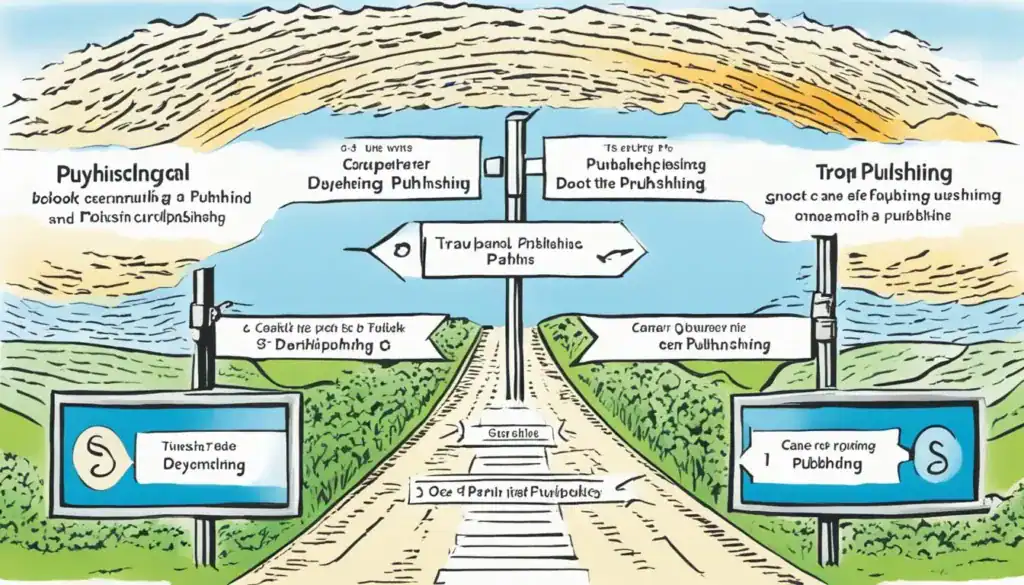
Deciding to self-publish or go the traditional route depends on what you want to achieve and the resources you have. Think about who you’re writing for, your budget, and if you’re up for marketing. Traditional publishing is good for those wanting a broad readership and extra help. Self-publishing suits those craving control and keeping more money.
The publishing world has many paths. Choose the one that best matches your dreams and vision for your book.
Conclusion
Deciding to publish a book is a big step, and it’s up to you. Both traditional and self-publishing paths have their pros and cons. You should think about what matters most to you: having control, costs, or how you can market your book.
If you dream of reaching lots of people, a traditional publisher could help with this by promoting and getting your book out there. On the other hand, if your audience is small or you want to lead the publishing efforts yourself, self-publishing might be the way to go.
Always remember, the choice is ultimately yours. It’s key to carefully look at your goals, budget, and how you plan to market your book. This way, you can pick the option that’s right for you when the time comes to publish.