
Greetings, fellow book lovers! Today, we are excited to bring you a captivating book review of Ernest Hemingway’s masterpiece, For Whom the Bell Tolls. This gripping novel takes us deep into the heart of the Spanish Civil War and provides an unflinching portrayal of the brutal realities of war.
Ernest Hemingway, a literary legend known for his concise and powerful storytelling, skillfully weaves a tale of picaresque romance, adventure, and tragedy against the backdrop of a tumultuous period in history. For Whom the Bell Tolls serves as the first major novel of the Second World War, solidifying Hemingway’s reputation as one of the greatest American writers of the 20th century.
The story revolves around Robert Jordan, an American partizan attached to the Loyalist forces, as he prepares to carry out a dangerous mission deep in Franco-controlled territory. As he navigates the complexities of war and forms unexpected connections with fellow fighters and the women affected by the conflict, Jordan’s journey becomes a profound exploration of love, bravery, and the human psyche.
For Whom the Bell Tolls is a timeless classic that continues to capture the imaginations of readers across generations. Hemingway’s unique writing style, characterized by authentic dialogue and unforgettable characters, brings the story to life in vivid detail.
Key Takeaways:
- For Whom the Bell Tolls is a highly acclaimed novel by Ernest Hemingway that explores the Spanish Civil War, making it a must-read for history enthusiasts.
- Hemingway’s writing style, characterized by dialogue and strong character development, adds depth and realism to the story.
- The novel delves into themes of love, war, bravery, and the impact of political ideologies on individuals, providing readers with a thought-provoking reading experience.
- Set during the 1930s, the Spanish Civil War serves as a crucial historical context for the events and themes explored in the book.
- For Whom the Bell Tolls received widespread critical acclaim upon its release and continues to be regarded as one of Hemingway’s greatest achievements.
Summary of For Whom the Bell Tolls
For Whom the Bell Tolls is a captivating novel by Ernest Hemingway that takes readers on a journey through the Spanish Civil War. The story revolves around the charismatic character of Robert Jordan, an American who joins the Loyalist forces with a mission to destroy a strategic mountain bridge in enemy territory.
Hemingway’s storytelling artistry shines as he delves into the themes of love, war, bravery, and the complexity of the human mind. Set over the span of three to four days, the novel follows Jordan’s interactions with an array of characters, including guerrilla fighters, women profoundly impacted by the war, and enemy soldiers.
The intensity of the story builds up to a thrilling climax as Jordan faces the challenges and dangers of carrying out his mission. Hemingway’s powerful prose and keen insight paint a vivid picture of war and its lasting effects on individuals and society.
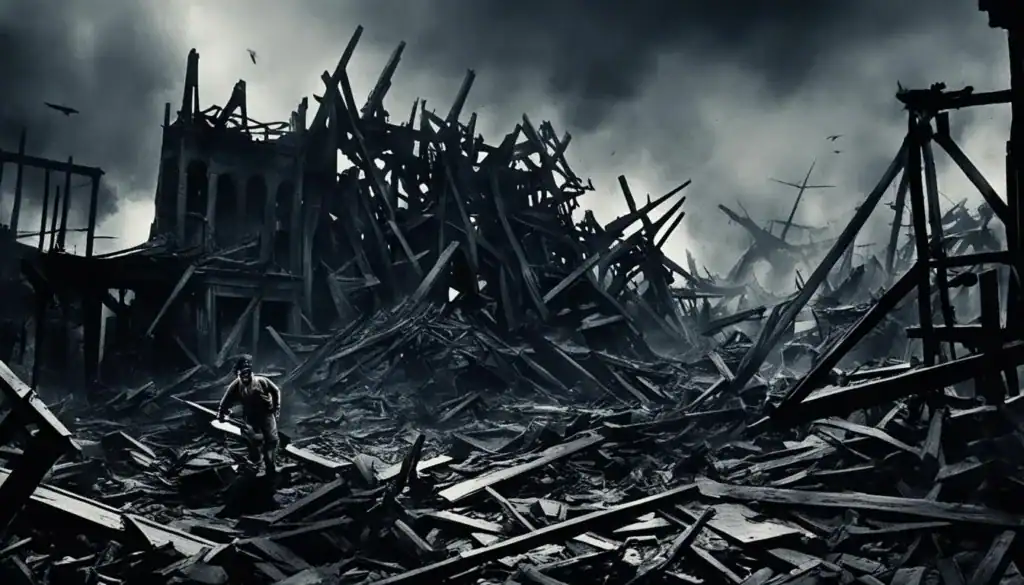
Through Jordan’s experiences, readers gain a deeper understanding of the Spanish Civil War and its historical context. Hemingway’s meticulous attention to detail and immersive storytelling make For Whom the Bell Tolls a must-read for anyone interested in the intricacies of war and the resilience of the human spirit.
Hemingway’s Writing Style
Hemingway’s writing style in For Whom the Bell Tolls is a true testament to his mastery of storytelling. One of the defining characteristics of his style is his use of dialogue, which brings the story to life with a sense of authenticity and realism.
The dialogue in the novel is often described as natural, capturing the rhythms and nuances of everyday conversation. Hemingway’s ability to write dialogue that feels genuine and true to life is one of the reasons why his work resonates so deeply with readers.
Furthermore, Hemingway’s writing style shines through in the way he develops his characters. Each character in For Whom the Bell Tolls is intricately woven into the story, with their own distinct personalities, motivations, and conflicts.

“Hemingway’s dialogue captures the essence of his characters, revealing their true thoughts and emotions.”
The combination of dialogue and character development allows readers to truly immerse themselves in the world Hemingway has created. As the story unfolds, we become invested in the lives of these characters, empathizing with their struggles and triumphs.
Hemingway’s writing style, with its emphasis on dialogue and character development, contributes to the overall power and impact of For Whom the Bell Tolls. It is a style that draws readers in, making the novel an engaging and unforgettable reading experience.
Themes Explored in For Whom the Bell Tolls
For Whom the Bell Tolls, a masterpiece by Ernest Hemingway set in the backdrop of the Spanish Civil War, delves into various themes that resonate with its wartime setting and the human experience. Through his vivid characters and their interactions, Hemingway skillfully explores the complexities of love in the midst of war, the brutality and futility of war itself, the concept of bravery, and the profound effects of political ideologies on individuals.
Hemingway’s exploration of love amidst the chaos of war brings forth a poignant reflection on the resilience and strength of the human spirit. The novel portrays how love can both drive individuals to endure immense hardships and provide solace in the face of adversity.
The brutality and futility of war is another prevailing theme in For Whom the Bell Tolls. Hemingway does not shy away from depicting the harsh realities of armed conflict, capturing the devastating consequences and human suffering inflicted by war. Through his visceral storytelling, he emphasizes the often fruitless nature of violence and its lasting impact on those involved.
The concept of bravery, central to the narrative, is explored through the characters’ actions and choices. Hemingway examines the different forms bravery can take, from the courageous acts of the partisans fighting against injustice to the internal struggles of individuals grappling with fear and uncertainty.
Last but not least, For Whom the Bell Tolls delves into the effects of political ideologies during wartime. Hemingway skillfully highlights how individuals become entangled in the larger ideological conflicts of the Spanish Civil War, illustrating the ways in which these ideologies shape their lives and decisions.

The Interplay of Themes
These themes intertwine throughout the novel, resulting in a thought-provoking exploration of the human condition in times of conflict. Hemingway’s vivid portrayal of characters and their experiences invites readers to reflect on the complexities and contradictions inherent in war, love, bravery, and political ideologies.
In For Whom the Bell Tolls, Hemingway presents a powerful narrative that goes beyond a mere war story. It is a deeply introspective work that draws readers into an immersive examination of the themes, leaving a lasting impact on their understanding of the human experience.
Historical Context of the Spanish Civil War
For Whom the Bell Tolls is set against the backdrop of the Spanish Civil War, which took place from 1936 to 1939. This war was a complex and brutal conflict between the Nationalists, led by General Franco, and the Republicans, consisting of various left-wing factions. It had significant international involvement, with different countries supporting either side.
During the 1930s, Spain was facing political unrest and social divisions that eventually led to the outbreak of the civil war. The war served as a prelude to the larger Second World War and had a profound impact on Spain and its people.
Hemingway’s novel, For Whom the Bell Tolls, offers valuable insight into the historical context of the Spanish Civil War. Through the experiences of the characters, readers gain a deeper understanding of the war’s political and social dynamics, as well as its impact on individuals.
Critical Reception of For Whom the Bell Tolls
When For Whom the Bell Tolls was first published, it garnered widespread critical acclaim. Ernest Hemingway’s depiction of the Spanish Civil War and the human experience during wartime struck a chord with readers and critics alike. The novel’s evocative and realistic portrayal of characters, along with its exploration of themes such as love, sacrifice, and the devastating effects of war, captivated the literary world.
Many reviewers praised Hemingway’s ability to capture the essence of the Spanish Civil War and the intricate emotions that accompany it. The characters in the novel were hailed as authentic and multilayered, their struggles and motivations resonating with readers on a profound level.
“Hemingway’s genius lies in his ability to create characters that feel real—their fears, hopes, and desperation leap off the page. For Whom the Bell Tolls is a testament to his mastery as a storyteller.” – Literary Review
Hemingway’s writing style also received significant praise, with his use of dialogue being a standout feature. Critics admired the natural flow of the conversations between the characters and the authenticity they brought to the narrative.
“Hemingway’s dialogue is so true-to-life, it’s almost as if you can hear the characters speaking. His words are like music, adding depth and richness to an already remarkable story.” – The New York Times Book Review
Continued Acclaim and Legacy
Decades after its initial release, For Whom the Bell Tolls continues to be regarded as one of Hemingway’s greatest achievements. Its profound exploration of the consequences of war and its impact on individuals resonates with readers of all generations. The novel’s enduring legacy is a testament to Hemingway’s ability to craft a timeless and thought-provoking work.
Impact and Legacy of For Whom the Bell Tolls
For Whom the Bell Tolls, Ernest Hemingway’s powerful novel set during the Spanish Civil War, has made a profound impact on literature and popular culture. This seminal work continues to be studied in academic settings, cementing its legacy as an important contribution to historical fiction and war literature.
The exploration of themes such as love, war, and the complexities of the human psyche resonates with readers today, making For Whom the Bell Tolls a timeless masterpiece. Hemingway’s vivid storytelling transports us to a turbulent era, capturing the heart-wrenching realities of war and the enduring power of love in the face of adversity.
“The world is a fine place and worth the fighting for and I hate very much to leave it.” – Ernest Hemingway, For Whom the Bell Tolls
The novel’s impact extends beyond the written word, as it has been adapted into a successful film and inspired various artistic interpretations. Its influence can be seen in the works of subsequent authors who have drawn inspiration from Hemingway’s powerful storytelling and portrayal of war.
For Whom the Bell Tolls solidified Hemingway’s reputation as one of the greatest American writers of the 20th century. His ability to delve into the complexities of the Spanish Civil War and capture the human experience during wartime has left an indelible mark on the literary world.
Conclusion
For Whom the Bell Tolls, written by Ernest Hemingway, is a powerful and thought-provoking novel that offers a gripping portrayal of the Spanish Civil War. Hemingway’s masterful storytelling, realistic dialogue, and well-drawn characters make the book a compelling read. Through the vivid and engaging narrative, readers are immersed in the brutal realities of war and the complexities of human emotions.
By exploring themes such as love, war, and bravery, For Whom the Bell Tolls provides valuable insights into the human experience. Hemingway’s portrayal of the war’s impact on individuals and society serves as a testament to the enduring effects of conflict. The novel continues to be celebrated as a literary masterpiece, captivating readers with its depth and profound exploration of the Spanish Civil War.
Whether you are a fan of Ernest Hemingway or interested in historical fiction, For Whom the Bell Tolls is a must-read. It offers an immersive experience that transports you to a tumultuous period in history while delving into the complexities of the human spirit. Don’t miss the opportunity to engage with this extraordinary book that has left an indelible mark on literature and continues to resonate with readers to this day.