
Welcome to our book review of “Gulag: A History” by Anne Applebaum. In this review, we will explore the captivating account of the Soviet Union’s labor camps, known as the Gulag. Applebaum’s meticulous research and firsthand testimonies provide a comprehensive understanding of this dark chapter in history.
Key Takeaways:
- The book “Gulag: A History” examines the origins, expansion, and daily life within the Soviet Union’s labor camps.
- Through newly accessible Soviet archives, camp memoirs, and survivor interviews, Applebaum provides a detailed and immersive exploration of the Gulag.
- The Gulag system evolved under Stalin’s regime, transforming from chaos to a centralized system of prison labor.
- The book examines the inhumane conditions, brutal treatment, and the extreme scale of the Gulag, which imprisoned millions of people.
The Origins and Expansion of the Gulag
In her book, “Gulag: A History,” Anne Applebaum provides a meticulous account of the origins and expansion of the Gulag under Stalin’s regime. It examines how the Gulag evolved from a chaotic aftermath of the Russian Revolution into a highly regulated and centralized system of prison labor.
The Gulag, an integral part of the Soviet Union’s economy, established labor camps across the entire country. These camps were not limited to heavy industries such as mining; they also encompassed consumer product manufacturing and significant scientific and engineering projects.
“The Gulag became a symbol of the Soviet Union’s oppressive regime, where slave labor was exploited for the benefit of the state,” Applebaum writes.
To gain a deeper understanding of this topic, it’s crucial to trace the historical context and delve into the expansion processes to comprehend the full scale of the Gulag system’s impact on individuals and society.
Life in the Gulag
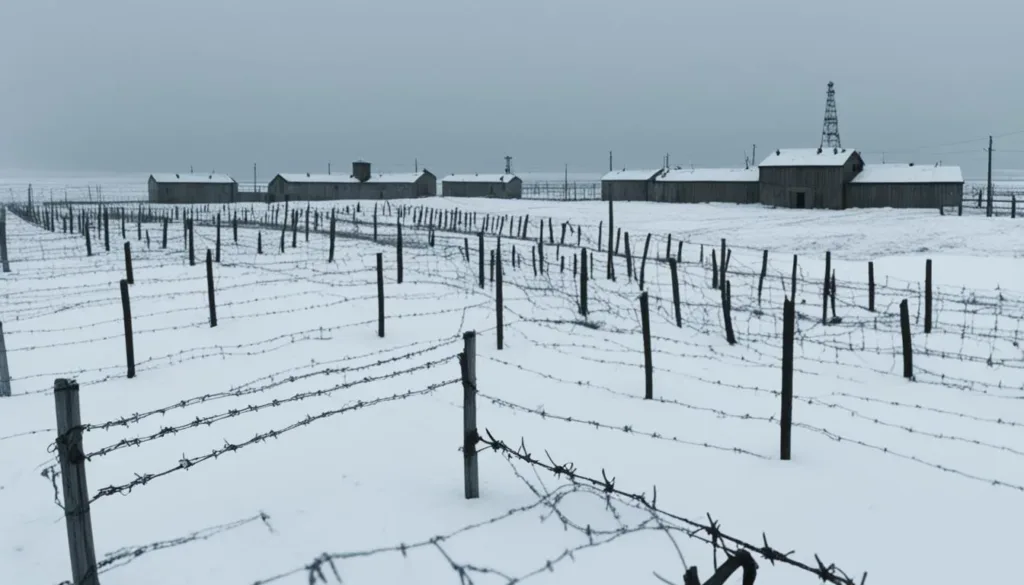
Within the vast expanse of the Gulag, life was a constant struggle for survival. Anne Applebaum’s book offers a profound exploration of the daily hardships and strategies employed by prisoners to navigate the unforgiving conditions within the labor camps.
The author pays particular attention to the experiences of women and children in the Gulag, shedding light on the mistreatment they endured. In these harsh environments, where survival was paramount, women and children faced unimaginable challenges.
“The Gulag was an unforgiving place, where women and children had to be resourceful and resilient. The assimilation of the youngest prisoners into this brutal world was a heart-wrenching aspect of life in the camps,”
Applebaum also delves into the complexities of relationships within the Gulag, addressing topics often left unexplored. The book uncovers the existence of sexual relationships and marriages between prisoners, which, despite the oppressive circumstances, served as a source of solace and support.
Amidst the grim reality, the Gulag was not devoid of resistance. Applebaum meticulously documents rebellions, strikes, and daring escape attempts that injected a sense of hope and defiance into the prisoners’ lives. These courageous acts became symbols of resistance against the oppressive system that held them captive.
Rebellion and Survival
The author provides a comprehensive account of the various rebellions that occurred within the Gulag, highlighting the determination of individuals to challenge the authorities. These rebellions, though often crushed by the regime, were powerful demonstrations of the prisoners’ refusal to be subjugated.
Survival in the Gulag relied on resourcefulness, adaptability, and sheer willpower. The book delves into the ingenious strategies developed by prisoners to endure the harsh realities of camp life. From secret networks to hidden caches of supplies, prisoners constantly sought ways to outwit the system that sought to break them.
“In the face of adversity, prisoners found strength in unity, forming alliances and support networks to help one another navigate the Gulag’s treacherous terrain,”
This comprehensive examination of life in the Gulag exposes the dark irony and tragic nature of the prisoners’ existence. Applebaum’s meticulous research, drawing from personal accounts and historical records, paints a vivid picture of the daily struggles and resilience of those trapped within the labor camps.
The Scale and Brutality of the Gulag
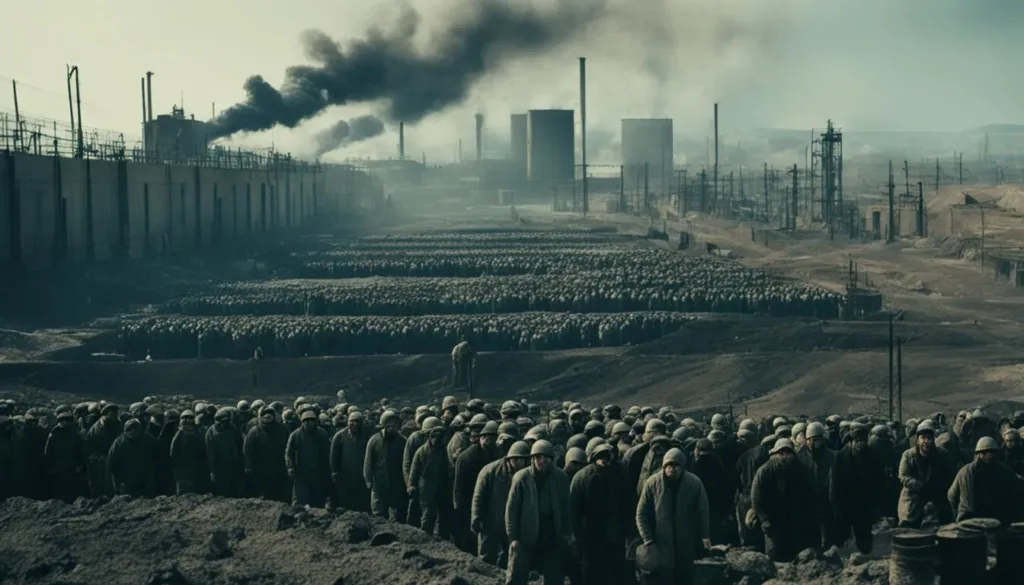
The Gulag, a sprawling system of Soviet labor camps, imprisoned millions of people, ranging from political dissidents and exiles to individuals from various ethnic groups. The magnitude of this oppressive system is truly staggering.
“The Gulag was a monstrous engine of repression on an industrial scale, unmatched in its brutality and dehumanization.” – Anne Applebaum
Anne Applebaum’s book, Gulag: A History, exposes the extreme scale and inhumane conditions endured by the Gulag’s prisoners. The brutal journey to the labor camps alone claimed the lives of many. Those who survived the arduous transportation faced further horrors within the camps.
The prisoners encountered brutal treatment, with inadequate clothing and meager rations. The harsh conditions imposed on them were meant to break their spirits and strip away their humanity.
“The Gulag was a weapon of control and oppression, where life counted for little and suffering was the norm.” – Anne Applebaum
In addition to the physical torment, the Gulag was also under the control of the Russian mob, who added another layer of violence and brutality. This further heightened the atmosphere of fear and hopelessness for the prisoners.
The International Response and Western Silence
One of the most perplexing aspects of the Gulag’s history is the lack of international response and Western silence in the face of the Soviet Union’s heinous crimes against humanity. Despite being aware of the atrocities committed within the Gulag, Western countries chose to remain largely mute, failing to take any meaningful action.
This silence in the face of such blatant human rights abuses raises important questions about the international community’s response to Soviet crimes. Why did the West, with its democratic values and commitment to human rights, not speak out against the Gulag? What factors contributed to their reluctance to acknowledge and confront the Soviet Union’s brutalities?
The implications of the Cold War loomed large over this international silence. The United States and other Western nations were engaged in a tense geopolitical struggle with the Soviet Union, and speaking out against the Gulag might have risked exacerbating existing tensions. The fear of further inflaming the strained relationship between the East and the West may have overshadowed the urgency of addressing the Soviet Union’s crimes.
Additionally, some Western countries may have been hesitant to fully acknowledge the extent of the atrocities committed within the Gulag. Doing so would have required them to confront the uncomfortable reality that their ideological opponent was engaged in grave human rights abuses. Admitting the truth would have undermined the moral high ground often claimed by Western democracies, potentially tarnishing their reputation and credibility on the international stage.
Overall, the international response to the Gulag and the silence of Western countries during this dark period remains a complex and troubling aspect of history. It serves as a reminder of the political, ideological, and strategic considerations that can influence and shape international responses to atrocities committed by powerful nations.
Reflections on Western Silence
“The silence of the West in the face of the Gulag’s horrors is a testament to the intricate layers of politics and power that often dictate international responses to human rights abuses.”
The Legacy of the Gulag
Through the stories and experiences of survivors, including notable figures like Aleksandr Solzhenitsyn and Varlam Shalamov, Applebaum humanizes the victims of the Gulag. The book reflects on the lasting impact and legacy of the Gulag, shedding light on the Soviet Union’s troubled past and providing a deeper understanding of the country’s history. It also emphasizes the importance of remembering and learning from these crimes against humanity to prevent their recurrence in the future.
We must never forget the atrocities and suffering inflicted upon the prisoners of the Gulag. Their stories are a testament to the resilience of the human spirit and serve as a reminder of the dangers of totalitarianism and oppression.
Conclusion
In conclusion, “Gulag: A History” by Anne Applebaum is an essential and gripping account of the Soviet Union’s labor camps. The book meticulously details the origins, expansion, daily life, and international response to the Gulag, providing readers with a comprehensive understanding of this dark chapter in history.
Through Applebaum’s thorough research and powerful storytelling, we gain insight into the unimaginable suffering endured by millions of prisoners. The Gulag serves as a reminder of the atrocities committed by the Soviet Union, shedding light on the inhumane conditions, brutal treatment, and wide-scale surveillance.
By acknowledging and remembering these crimes against humanity, we honor the victims and ensure that the lessons learned from this dark period continue to guide us. “Gulag: A History” is a poignant and unflinching exploration of the Gulag system, making it a must-read for anyone seeking a deeper understanding of Soviet history and the human capacity for resilience and survival.