
Welcome to our book review of “In the Heart of the Sea: The Tragedy of the Whaleship Essex” by Nathaniel Philbrick. In this gripping account, Philbrick takes us on a harrowing journey into the tragic story of the whaleship Essex and its ill-fated crew. The book offers a vivid portrayal of the disaster that unfolded during the 19th century.
The whaleship Essex, commanded by Captain George Pollard, embarked on a perilous whaling voyage in search of the valuable spermaceti oil extracted from sperm whales. Little did they know that their luck was about to change dramatically. The crew encountered a massive sperm whale that attacked their ship, leading to its sinking and leaving them stranded in open boats in the vast expanse of the Pacific Ocean.
Surrounded by hunger, thirst, and the relentless forces of nature, the crew faced a desperate battle for survival. Tragically, some members perished during their ordeal, and the survivors were ultimately forced to resort to cannibalism. After months of drifting, a few members were rescued, but the impact of their harrowing experience would linger on.
In the years that followed, the story of the whaleship Essex and the crew’s struggle became the inspiration for Herman Melville’s legendary novel, Moby Dick. The events of the Essex’s destruction and the crew’s courageous fight for survival continue to be taught in history classes today, serving as a testament to the resilience and indomitable spirit of those who faced unimaginable tragedy at sea.
Key Takeaways
- The book provides a gripping and harrowing account of the tragedy that befell the whaleship Essex and its crew.
- The story sheds light on the dangers and perils of the 19th-century whaling industry and the intense battles with sperm whales.
- The crew’s encounter with a massive whale leads to their ship’s sinking and their desperate struggle for survival in the open ocean.
- The tragedy of the whaleship Essex has had a lasting impact, inspiring Herman Melville’s Moby Dick and continuing to be taught in history classes.
- Nathaniel Philbrick’s meticulous research and storytelling skills bring the events to life and offer a valuable historical perspective.
The Whaleship Essex and the Perils of Whaling
The Whaleship Essex, commanded by Captain George Pollard, embarked on a perilous whaling voyage from Nantucket. Their mission: to harvest valuable spermaceti oil from the majestic sperm whales of the deep. During the 19th century, the demand for whale oil reached unprecedented heights, driving the hunting of over 200,000 sperm whales for their valuable byproducts.
The crew of the Essex would row their boats up to these colossal creatures, armed with harpoons, ready to engage in dangerous and intense battles. They would thrust the harpoons into the sides of the sperm whales, hoping to strike a fatal blow. It was a formidable task, requiring immense skill, courage, and strength.
The Essex was considered a lucky ship, renowned for its successful hunts and bountiful oil reserves. However, their luck would soon be tested in unimaginable ways.
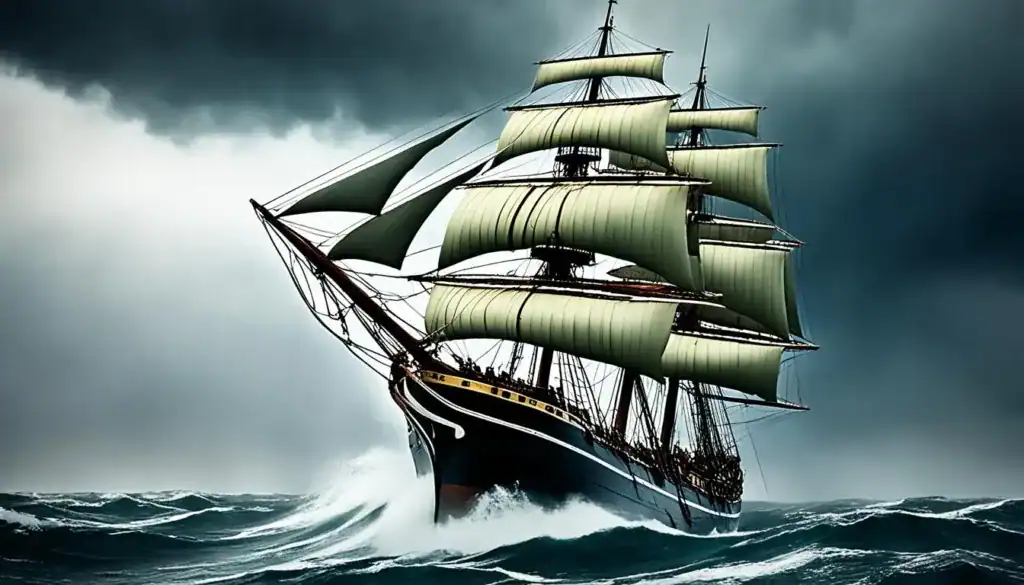
The whaling industry not only brought economic prosperity but also carried inherent risks. The crews faced constant danger when confronting these magnificent creatures. A wrong move or a split-second delay could mean disaster. The harpoons driven into the whales’ sides would often trigger battles between man and beast, battles that jeopardized the lives of those aboard the ships.
The Tragic Encounter with the Sperm Whale
In the midst of their treacherous voyage, the crew of the Essex faced a horrifying encounter with a massive sperm whale. With a force that shook the very foundation of our ship, the whale struck the Essex, causing it to succumb to its watery grave.
Left stranded in open boats, surrounded by nothing but the vast expanse of the Pacific Ocean, our survival became an arduous battle against nature’s fury. Hunger gnawed at our empty bellies, thirst parched our throats, and the relentless exposure to the elements took its toll on our weary bodies.
Tragically, some of our brave crew members did not survive the initial shipwreck, succumbing to the unforgiving sea. Others, however, faced an even grimmer reality, resorting to the unthinkable act of cannibalism in order to preserve their own lives.
For months, we drifted aimlessly, our hopes of rescue flickering like a distant star on the horizon. It seemed as if our fate was sealed, our story destined to be swallowed by the vast depths of the ocean. But against all odds, a glimmer of hope emerged as a few of us were eventually rescued, providing a beacon of light amidst the darkness of our despair.
The Impact and Legacy of the Tragedy
The tragedy of the whaleship Essex had a profound impact on the survivors and the community of Nantucket. The story itself inspired Herman Melville to write his classic novel, Moby Dick. As we dive deeper into the legacy of this tragic event, we uncover the far-reaching effects it has had on literature and the collective consciousness.
Moby Dick: A Literary Masterpiece
“Call me Ishmael.”
The legacy of the Essex can be seen through the enduring popularity and literary significance of Moby Dick. Herman Melville, fascinated by the real-life events, wove them into his epic tale of Captain Ahab and the great white whale. Moby Dick, often considered one of the greatest American novels, explores themes of obsession, revenge, and the complexities of humanity’s relationship with nature.
The impact of Moby Dick on literature cannot be overstated. The novel continues to captivate readers with its vivid characters and rich symbolism. The tragic events of the Essex provide a backdrop for Melville’s exploration of the human spirit and the depths of the unknown.
Lessons of Resilience and Determination
The events of the Essex’s destruction and the crew’s struggle for survival have become synonymous with resilience and determination in the face of adversity. The story serves as a powerful reminder of the strength of the human spirit when faced with unimaginable challenges.
In the heart-wrenching aftermath of the tragedy, the survivors demonstrated remarkable resilience. Their harrowing experiences highlight the indomitable nature of the human will and the lengths people will go to survive in the face of insurmountable odds.
The legacy of the Essex has resonated through the generations, and the lessons it imparts continue to be taught in American history classes. The tale serves as a poignant reminder that even in the face of tragedy, strength and courage can emerge.

The Book’s Narrative and Historical Significance
Nathaniel Philbrick’s book, In the Heart of the Sea, takes readers on a captivating journey, recounting the tragic tale of the whaleship Essex. Through meticulous research and expert storytelling, Philbrick brings to life the harrowing events that unfolded on the ill-fated voyage.
With a keen attention to detail, Philbrick transports readers back to the 19th century, immersing them in the challenging and perilous world of the whaling industry. Through vivid descriptions and captivating narrative, he shines a light on the hardships faced by sailors during this era.
But In the Heart of the Sea goes beyond a mere retelling of a tragic event. Philbrick delves into the historical significance of the Essex and its crew, offering valuable insights into the whaling industry and the Quaker community of Nantucket. This exploration of history adds depth and context, allowing readers to gain a better understanding of the era and the forces that shaped it.
“Philbrick’s narrative prowess is on full display in In the Heart of the Sea. Through meticulous research and evocative storytelling, he delivers a powerful and captivating account of a tragic historical event.” – Book Review Digest
Furthermore, the book serves as a reminder of the relentless pursuit of profit at the expense of nature’s delicate balance. Philbrick’s narrative sheds light on the impact of the whaling industry on marine ecosystems and the repercussions of human greed.
Through In the Heart of the Sea, Nathaniel Philbrick delivers a masterful blend of gripping storytelling and historical analysis. His ability to weave together a captivating narrative while imparting historical insights sets this book apart, making it a must-read for those interested in the real-life stories that shape our world.
Conclusion
In conclusion, In the Heart of the Sea: The Tragedy of the Whaleship Essex is a gripping and thought-provoking book that takes readers on a harrowing journey through the true story of the Essex and its ill-fated crew. The book offers a reflective exploration of the dangers inherent in the whaling industry, exposing the perils faced by those who ventured into the treacherous open seas.
Through vivid storytelling, the author, Nathaniel Philbrick, immerses us in the unimaginable challenges that the crew of the Essex experienced. We witness their resilience and the unwavering human spirit as they fought to survive against all odds. This tragic tale serves as a timeless reminder of the indomitable strength within us and the power of survival even in the face of unimaginable circumstances.
Moreover, In the Heart of the Sea sheds light on the historical significance of this tragic event. It offers a glimpse into the whaling industry of the 19th century and the hardships endured by those who made their living harvesting valuable resources from majestic creatures like the sperm whale. The book prompts us to reflect on the price paid for progress and the consequences of exploiting our natural resources.