
Welcome to our book review of The Sun Also Rises by Ernest Hemingway. In this article, we will provide an insightful analysis of the novel, exploring its themes, characters, and the impact of Hemingway’s writing style. The Sun Also Rises is a literary work that delves into the post-war disillusionment of the Lost Generation, captivating readers with its vivid descriptions and complex exploration of love, loss, and the search for meaning.
Key Takeaways:
- The Sun Also Rises is a novel by Ernest Hemingway.
- The book explores the themes of the post-war disillusionment of the Lost Generation.
- Hemingway’s concise writing style and descriptive prose are notable features of the novel.
- The characters in the story reflect the aimlessness and detachment of the Lost Generation.
- The bullfighting scenes in the novel serve as a symbolic backdrop for the characters’ internal struggles.
Hemingway’s Writing Style
Ernest Hemingway is renowned for his distinct writing style characterized by concise, sparse language. In his novel, The Sun Also Rises, Hemingway’s ability to convey deep meaning with few words is on full display. The book is a testament to his mastery of descriptive prose, painting vivid pictures and evoking strong emotions in the reader’s mind.
Hemingway’s writing is often described as elegant and clear, capturing the essence of the characters and settings in a remarkably concise manner. He uses carefully chosen words and phrases that pack a punch, making every sentence count. This approach allows Hemingway to create impactful and memorable sentences that stay with the reader long after they finish the book.
“There is no rule on how to write. Sometimes it comes easily and perfectly; sometimes it’s like drilling rock and then blasting it out with charges.”
Hemingway’s talent for concise language is what sets him apart as a writer. He believes in saying more with less, trusting readers to fill in the gaps and engage with the story on a deeper level. By using minimalistic language, Hemingway’s writing leaves an indelible impression, allowing readers to connect with the characters and their experiences.
The Sun Also Rises brilliantly showcases Hemingway’s unique writing style. Through his concise language, Hemingway creates a narrative that is both powerful and thought-provoking. With vivid descriptions and evocative metaphors, he brings the scenes and emotions to life, immersing the reader in the world of the characters.
The Power of Descriptive Prose
Hemingway’s mastery of descriptive prose is evident throughout The Sun Also Rises. Whether he is describing the vibrant streets of Paris or the sprawling landscapes of Pamplona, his words paint a vivid picture in the reader’s mind. As readers, we are transported to these places, experiencing the sights, sounds, and even the smells through Hemingway’s careful and evocative descriptions.
One of the most iconic scenes in the novel is the bullfighting event. Hemingway’s descriptions of the bullfights are filled with detail and passion, capturing the intensity and brutality of the sport. The imagery he conjures is so vivid that we can almost feel the tension in the air and hear the crowd’s roar. Through his descriptive prose, Hemingway not only transports us to the bullring but also symbolizes the characters’ struggles and desires.
In conclusion, Ernest Hemingway’s writing style, characterized by concise language and descriptive prose, is the backbone of his literary genius. In The Sun Also Rises, Hemingway’s ability to convey deep meaning with few words leaves a lasting impact on readers. His elegant and clear prose captivates, drawing us into the lives of the characters and the world they inhabit.
The Characters and Themes
In The Sun Also Rises, the characters are portrayed as petty and detached from one another, reflecting the disillusionment and aimlessness of the Lost Generation. This generation, a term coined by Gertrude Stein, refers to the group of people who came of age during World War I and were disillusioned by the societal and cultural changes that followed. The characters in the novel mirror this sense of disconnection, their lives filled with empty pursuits and self-indulgence.
The themes explored in the book revolve around the characters’ search for meaning in a post-war world. Love, or rather, unrequited love, is one of the central themes. The characters, particularly Jake Barnes, find themselves longing for love and connection, but unable to fully achieve it. This unfulfilled desire adds to their sense of emptiness and fuels their self-destructive behaviors.
Alcoholism is another prevalent theme in The Sun Also Rises. The characters often turn to alcohol as a means of escaping their reality and numbing their emotions. Drinking serves as both a social activity and a coping mechanism, highlighting the characters’ inability to confront their deeper issues.
The character of Jake Barnes, with his impotence, embodies the struggles and frustrations of the Lost Generation. His longing for Lady Brett Ashley, a woman he cannot physically be with due to his war injury, serves as a focal point for these themes of love and unfulfilled desires. Through Jake’s experiences, Hemingway explores the destructive nature of unrequited love and the painful consequences it can have on one’s sense of self.

The Sun Also Rises delves into the complexities of relationships and the profound impact they can have on individuals. Hemingway’s portrayal of the characters and their struggles highlights the damaging effects of love unattained and the self-destructive tendencies that often accompany it. The novel provides keen insights into the disillusionment and lostness experienced by the Lost Generation, making it a compelling read for those interested in exploring the themes of love, alcoholism, and the search for meaning in a post-war world.
The Bullfighting Scene
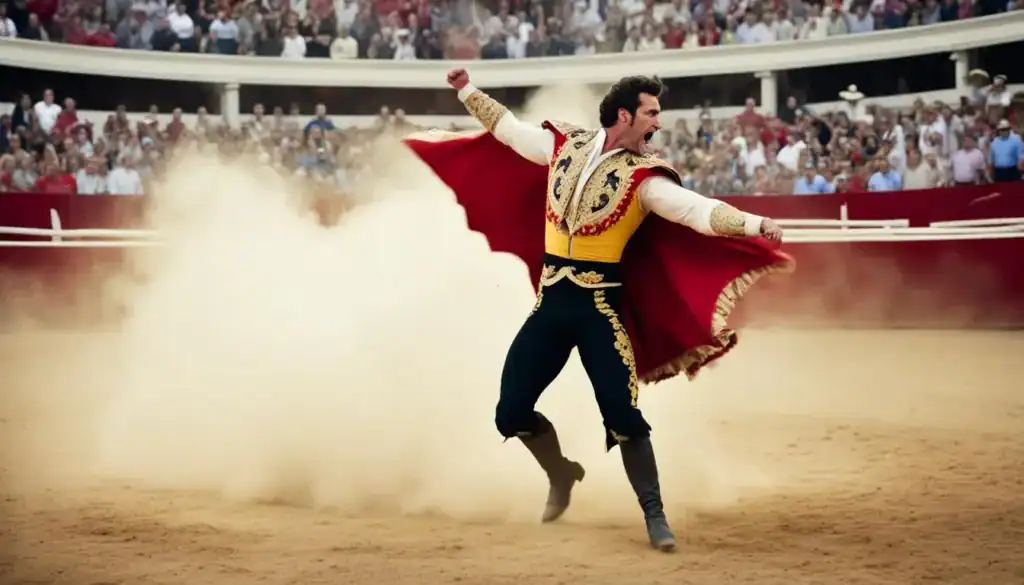
The second half of the novel takes us to Pamplona, immersing us in the vibrant world of bullfighting, a quintessential part of Spanish culture. Hemingway’s masterful prose brings the bullfights to life, painting vivid portraits of the intense and brutal spectacle that unfolds in the arena.
“The matador’s red cape swirled, drawing the fierce gaze of the charging bull. The crowd held its breath, caught in a moment of suspended tension as man and beast engaged in a primal dance of life and death.”
Beyond the captivating descriptions, the bullfighting serves as a powerful symbol within the novel. It becomes a metaphor for the characters’ own internal struggles and desires, mirroring their relentless pursuit of meaning and purpose in a post-war world.
The futility of their endeavors becomes apparent as the bullfighting scene unfolds, highlighting their inability to find true fulfillment and satisfaction. The grand spectacle of the bullfighting arena becomes a stage where their hopes and dreams are shattered, where illusion meets the harsh reality of life.
While the depiction of bullfighting may be unsettling for some readers, Hemingway’s skillful writing captures the balletic nature of the spectacle, revealing its poetic and ritualistic qualities. It becomes a canvas for the exploration of human emotions and desires, transcending mere violence and showcasing the complexity of the human condition.
The bullfighting scene in The Sun Also Rises is a testament to Hemingway’s ability to intertwine cultural elements rich in symbolism with the nuances of human experience. Through his words, the bullring becomes a microcosm of the characters’ struggles, inviting readers to reflect on their own pursuit of purpose, identity, and fulfillment.
Spanish Culture and Symbolism
The bullfighting scene not only captures the essence of Spanish culture but also embodies the novel’s broader thematic exploration. Spanish culture, with its passionate traditions and inherent symbolism, provides a backdrop against which the characters grapple with their own personal demons and desires. The bull itself becomes a potent symbol, representing both the challenges they face and the inevitable confrontation with their own inner turmoil.
Conclusion
In conclusion, The Sun Also Rises is a novel that elicits mixed opinions. Hemingway’s writing style and descriptive prose are commendable, showcasing his talent for crafting impactful sentences. The book explores themes of love, loss, and the disillusionment of the Lost Generation. While some readers may find the novel tedious and repetitive, it is undeniably a work of literary value. The Sun Also Rises offers insights into Hemingway’s view of post-war society and the human condition.