
Many ask why Jesus didn’t write any books or why what He wrote wasn’t saved. The Bible doesn’t say exactly, but we can guess. One reason could be that we tend to focus too much on certain things and miss the big picture.
When Jesus left, He said it was better for His followers. They’d learn to connect with God’s will inside them. This is better than just following His words. If Jesus had written a book, people might have missed other important lessons from God.
Also, if His written words were saved, they might have been worshiped as idols. Maybe God wanted to make sure we don’t worship things. Instead, God wants us to value understanding and all of His teachings.
Key Takeaways
- Jesus did not write a book of the Bible, and the exact reason is not given in Scripture.
- One possible reason is to prevent overemphasis on His words and to avoid the temptation of idolatry.
- Jesus wanted His disciples to rely on a personal, internal connection to God’s will.
- If Jesus had written a book, people might have ignored other important teachings from God.
- God may have intentionally avoided giving us physical writings to avoid idol worship and promote a deeper understanding of His Word.
Jesus’ Presence and Discipleship
When Jesus was on earth, His physical presence meant a lot to his followers. They saw his teachings and miracles up close and felt close to Him. But Jesus knew his leaving would actually help them.
He told them that after he’s gone, they’ll have a way to be closer to God’s will. Obviously, this was through the Holy Spirit. With the Spirit’s help, they could keep sharing the good news and make choices that fit God’s plan.
Imagine if Jesus stayed with them. They would always depend on what they see and hear from Him physically. Yet, this would have made them rely less on their own relationship with God. It would also limit how far they could spread the good news since they would mainly look to Jesus for directions.
But with the Holy Spirit, they were not limited. They became better at spreading God’s rule. Now, following God didn’t mean following a visible Jesus. It meant living by God’s spirit and doing what he guides us to do.
Jesus wanted his followers to keep on with his mission even after he was no longer physically there. With the Holy Spirit, we’re also ready to live out our faith. This includes continuing Jesus’ work in the world now.
Today, we’re still asked to follow Jesus and let the Holy Spirit lead us. This way, we get to fully live out what Jesus taught. It means we’re given a certain task to do.
Thinking about how it was to be with Jesus in person is moving. But today, the Holy Spirit allows us to feel Jesus’ guidance and strength. The picture here shows how important Jesus’ physical presence was back then. It also shows how we have shifted to depending on the Spirit now.
Idolatry and Relics
Imagine if Jesus had left his writings behind. Some people might start treating them like holy relics. Look at the Old Testament. People got very focused on items linked to big figures, like Moses. By not leaving any writings, Jesus might have avoided this issue on purpose.
Not having Jesus’ writings also stops us from putting his words above everything else in the Bible. It reminds us that all Scripture is from Jesus and God. This way, we can understand the Bible as a whole without making parts more important than others.
To explain, look at the image below:
This picture shows the problem of putting too much value on Jesus’ physical writings. It reminds us not to get fixated on objects. Instead, we should focus on understanding God’s Word completely and living by it.
Jesus’ Ability to Read and Write
In the New Testament, we learn Jesus could read and write. He showed this by reading from Isaiah at the synagogue. Another time, he wrote in the ground when speaking to the scribes and Pharisees. This proves Jesus could write too. Even though no writings from Jesus are left, it doesn’t mean he couldn’t. Jesus taught mainly by talking, as was common then.
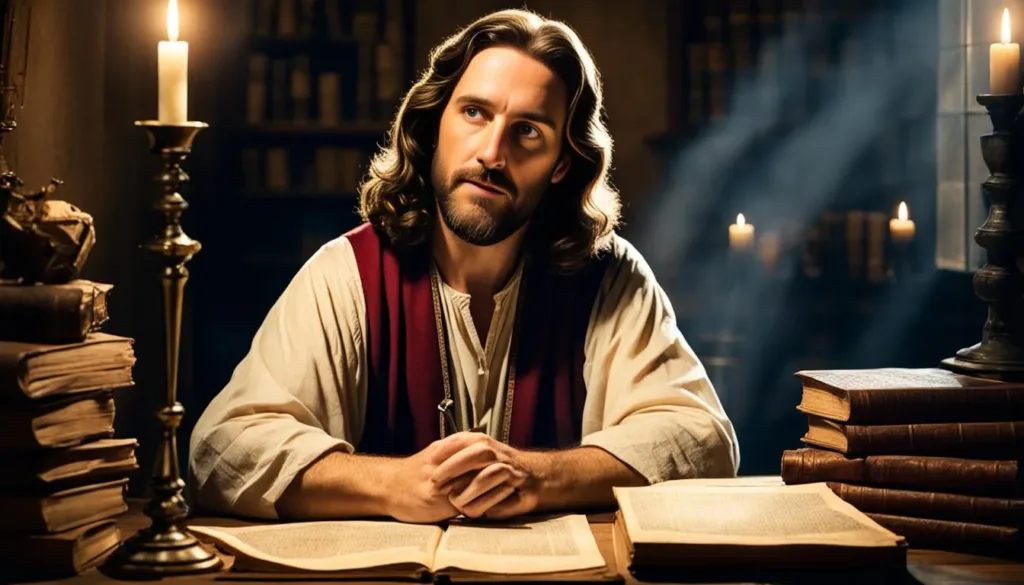
It is clear Jesus was literate. However, writing wasn’t the main way people communicated back then. Jesus preferred to talk directly to people – teaching face-to-face with his followers. Talking was the best way for him to make his message clear.
Jesus connected with his listeners through talking. This made his teachings easily understood by everyone. It also made faith a shared, spoken experience. This way, people could learn and grow together in their faith.
The Role of the Church
Catholics aren’t troubled by Jesus’s lack of writings. They trust the Church to pass down the faith. Jesus set up his Church to be the guardian of truth. The Church keeps and shares Jesus’s teachings through generations.
The Bible is key, but not the only way our faith spreads. The Church helps explain and share Jesus’s teachings. With the Holy Spirit’s help, the Church makes God’s Word clear. This guidance helps us understand life’s challenges better.
The Church is like a family, supporting each other in faith. It gives us ceremonies, prayers, and community. These help us grow spiritually and get closer to God.

In the Church, we feel like we belong. We care for each other and grow through learning from wiser members. Faith keeps flowing through time because of this sharing.
Unity and Diversity
The Church includes people from all over, with different backgrounds. This mix makes us understand faith better. We unite in following Jesus and sharing His message of love.
Through the Church, we join all believers, past and present, worldwide. We learn from the saints, drawing courage from their faith. They urge us to be true in our faith walk.
The Church’s task in passing down our faith is crucial. It keeps Jesus’s teachings fresh and connects people in a lively community of faith.
Historical and Theological Perspectives
Looking at Jesus’ absence of writings needs us to use both historical and theological views. In the past, very few people could read and write. This was especially true in places like Galilee, where Jesus lived. He was a carpenter, so he might not have been well-educated. And back then, talking face-to-face was key, not writing things down.
Jesus not writing things down might make you wonder. But, look at it this way. The real power is in what he taught and how it changed people. His legacy lives on through his followers and the wisdom he shared, not paper and ink.
Understanding the Cultural Context
In Jesus’ world, talking was much more powerful than writing. People shared stories and wisdom directly with each other. This way, not just the words, but the feelings behind them were passed on.
People couldn’t just pick up a book to learn about things like we can today. They learned through what was told to them. This ‘oral tradition’ was the main way stories, teachings, and history were kept alive from one generation to the next.
Though Jesus didn’t write anything down himself, it doesn’t make his teachings less important. In fact, his message of love and peace has touched millions, despite no written record by him. The heart of Christianity is in his teachings, not in any written books.
Conclusion
In conclusion, why Jesus didn’t write part of the Bible has different possible reasons. He may have chosen not to create a written legacy. This might prevent people from focusing too much on his words. Plus, it could stop people from worshiping him too much, as a written record might lead to that.
It’s possible that Jesus knew his message would be better passed down through personal experiences of God’s will. This way, everyone could learn about God directly, with the help of the Holy Spirit. Internalizing this teaching lets people better understand and use God’s Word in their lives.
The Church and the time’s culture also play a big role here. The Church works to keep Jesus’ true message alive through generations. Jesus had to rely on the Church to spread his teachings accurately, ensuring they are understood completely.
Even though Jesus didn’t write any books, this shouldn’t take away from the importance of his lessons. Focus should be on living as Jesus taught. The Bible provides a guide for every believer. Studying Jesus should be about applying his teachings in practical ways and following his example.